AI Insights
How AI Is Changing Medical Billing for Small Practices

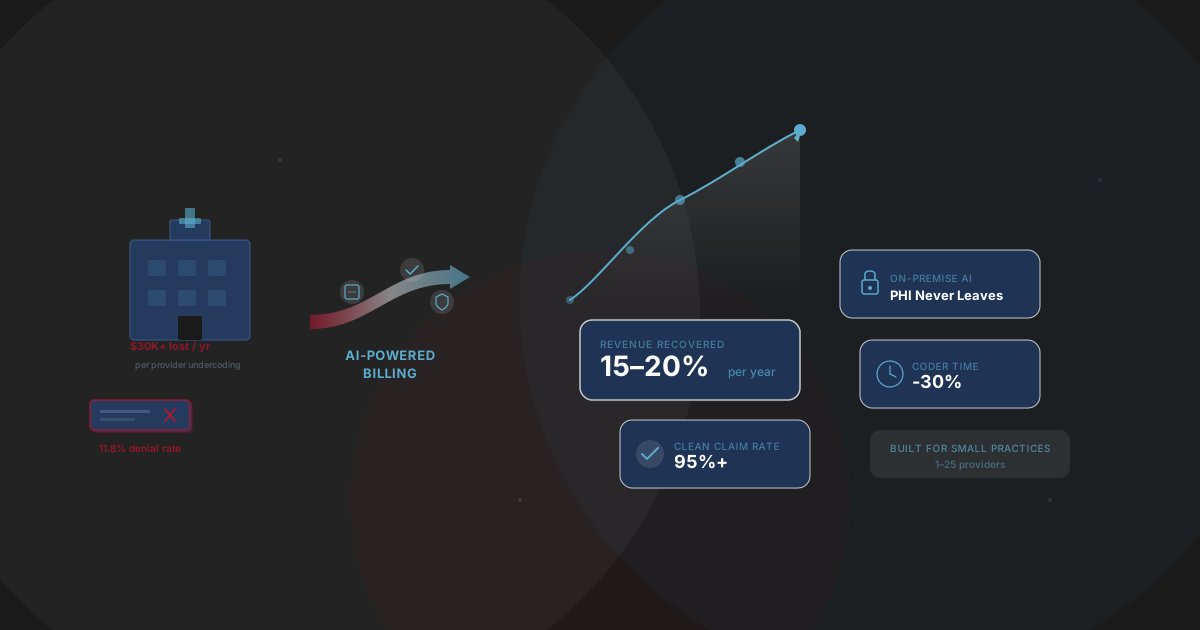
Small medical practices lose 15-20% of their revenue to billing errors, denied claims, and undercoding. AI billing tools are starting to make a real dent in that number, but you can't just subscribe to a cloud platform and call it solved. The technology matters. Where it runs matters more.
The Billing Crisis Small Practices Face
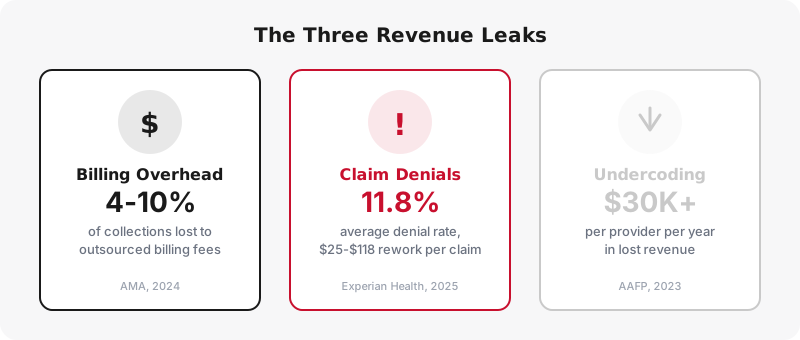
The AMA's 2024 Practice Benchmark Survey puts administrative costs at 15.5% of net patient revenue on average. For solo practitioners, billing alone eats up 10.9% of collections. Add outsourced billing fees (typically 4-10% of collections) and the margins get ugly fast.
Staffing makes it worse. Billing departments churn through people at over 30% annually (MGMA, 2024). Every time a trained biller leaves, they take payer-specific knowledge with them: which modifiers go where, which diagnosis codes a particular insurer flags, how to preempt a denial from Blue Cross vs. Aetna. Replacing that takes months.
Denials Keep Getting Worse
Experian Health's 2025 report puts the average denial rate at 11.8%, continuing a five-year upward trend. MGMA estimates reworking a denied claim runs $25 to $118 per claim. For a small practice processing 3,000-5,000 claims a year, even a modest denial rate adds up fast.
Payer rules keep getting more granular. ICD-10-CM has over 72,000 diagnosis codes now. Claims that used to pass with "knee pain" now need laterality, chronicity, and sometimes mechanism of injury. None of these trends are reversing, and they all hit small practices with lean billing teams hardest.
The Undercoding Problem No One Talks About
Most practice owners fixate on denials because they're visible. But undercoding often costs more.
A physician consistently performs and documents Level 4 E/M visits (99214) but bills them as Level 3 (99213) out of habit, uncertainty, or fear of audits. AAFP estimates this costs the average family physician $30,000+ per year. For specialists with modifier-intensive coding, the gap is bigger.
The worst part? It never triggers a rejection notice. No denial letter. No rework queue. The money just never shows up.
On-premise AI systems trained on coding patterns for your specialty can catch undercoding before claims go out. That's one of the problems that led us to build Sovereign RCM. It flags these patterns locally, without sending patient data to a third-party cloud.
How AI Billing Tools Actually Work
The implementations that deliver results all target specific, measurable failure modes instead of promising vague "optimization."
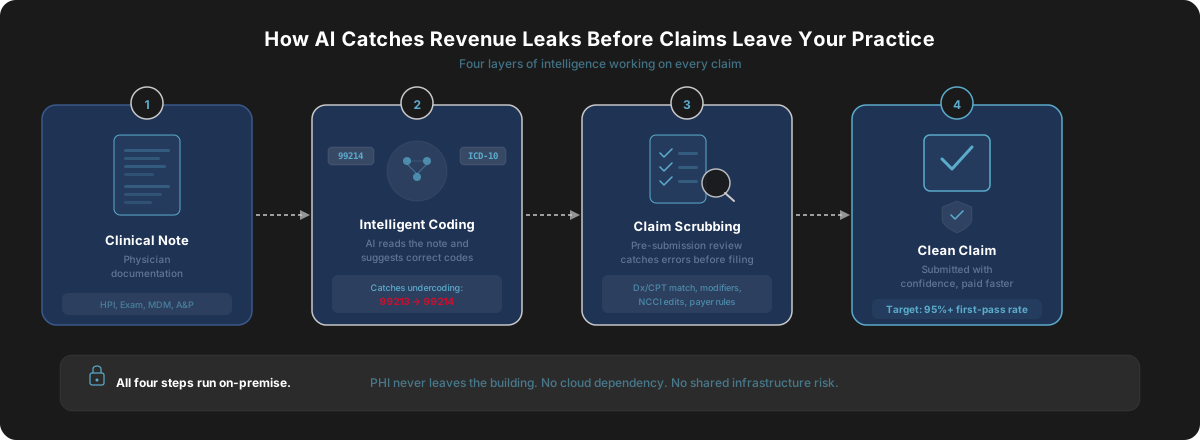
Coding assistance: AI trained on clinical documentation reads a physician's note and suggests the right CPT and ICD-10 codes. NLP models parse unstructured text, extract medical decision-making elements, and map them to the coding framework. When the AI suggests a Level 4 visit and the documentation supports it, the coder can bill confidently instead of defaulting to Level 3.
Pre-submission scrubbing: Instead of catching errors after a denial, AI reviews every claim before it goes out. Missing diagnosis-procedure combinations, modifier errors, payer-specific coverage gaps, bundling errors under NCCI edits. The goal is pushing the clean-claim rate as close to 100% as possible.
Denial pattern analysis: AI mines historical denial data and spots patterns human billers miss. When a specific payer starts rejecting a particular code combination more often, the system catches the trend before denied claims pile up. Going from reacting to denials to preventing them is where AI makes the biggest difference right now.
The Security Question
Before adopting any AI billing system, ask where the data goes.
The Change Healthcare cyberattack in February 2024 disrupted claims processing for roughly 40% of all U.S. healthcare claims. The breach affected 192.7 million individuals, the largest healthcare data breach in history. It wasn't a sophisticated exploit. It worked because a centralized cloud system became a single point of failure for a huge portion of the healthcare ecosystem.
That's the core vulnerability of cloud-based billing. Every practice routing claims through a shared platform is exposed not just to its own security posture but to every other organization on that platform.
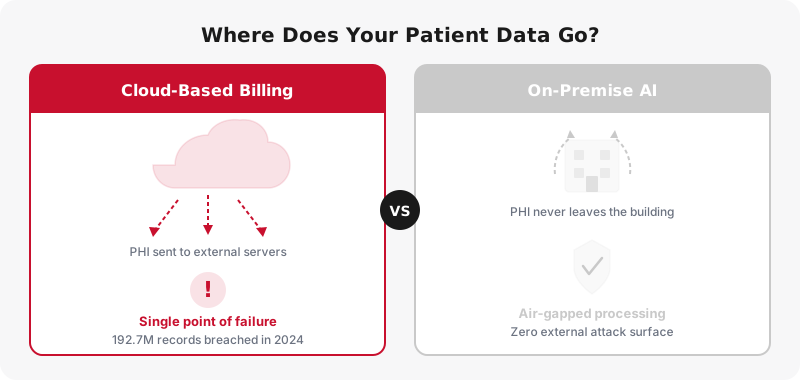
On-premise processing avoids this. PHI never leaves the building. An air-gapped system handles billing data locally, which eliminates the attack surface that made the Change Healthcare breach possible. That's the approach behind Sovereign RCM's security architecture.
Before You Adopt AI Billing
Start with a pilot. Any credible vendor should offer a shadow mode where the AI runs alongside your existing workflow. You compare results directly without putting revenue at risk.
Measure what matters. Track your clean-claim rate, denial rate by payer, days in A/R, and undercoding recapture. If the AI consistently identifies opportunities to code higher with documentation support, that delta is recovered revenue.
Ask the right questions. Where does inference happen? Who has access to the data? Does the model improve based on your practice's patterns or is it static? What happens when the system goes down?
Payer complexity will keep increasing. Coding requirements will keep expanding. The billing workforce will keep shrinking. These are structural problems, not cyclical ones.
We built Sovereign RCM because small practices shouldn't have to trade data security for operational efficiency. If you're evaluating AI billing solutions for your practice, we'd like to talk.
Sources
- American Medical Association. 2024 AMA Practice Benchmark Survey. AMA, 2024.
- Experian Health. State of Claims Report 2025. Experian Health, 2025.
- Medical Group Management Association. 2024 DataDive Cost and Revenue Report. MGMA, 2024.
- American Academy of Family Physicians. 2023 Practice Economics Report. AAFP, 2023.
- U.S. House Energy & Commerce Committee. Hearing on the Change Healthcare Cyberattack. April 2024.
- UnitedHealth Group. Quarterly Report (10-Q), Q3 2024. SEC Filing, 2024.
About the Author

Ghulam Shah
Chief Technology Officer
AI architect and data strategist at Sovereign RCM. Ghulam has built enterprise data platforms at scale, led ML forecasting models, and turns complex AI into production-grade products.